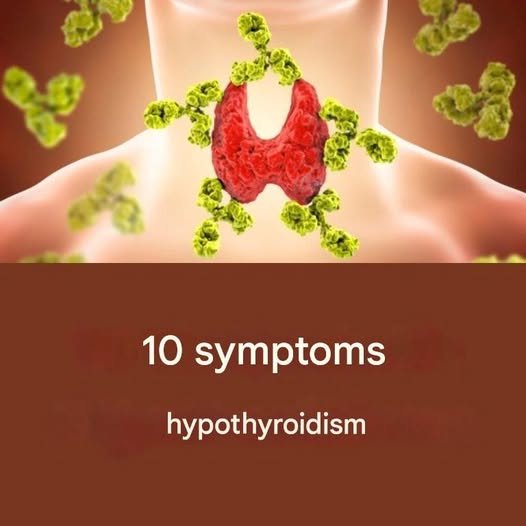
10 Symptoms of Hypothyroidism
-
Fatigue and Weakness
Feeling unusually tired, sluggish, or lacking energy is one of the most common signs. Everyday tasks may feel more exhausting than usual. -
Weight Gain
Unexplained weight gain despite no change in diet or physical activity can occur due to a slowed metabolism. -
Cold Intolerance
People with hypothyroidism often feel cold, even in warm environments, because their body temperature regulation is affected. -
Dry Skin and Hair
Skin may become dry, rough, or pale. Hair may become brittle, thin, or fall out more easily. Eyebrow hair, particularly the outer edges, may also thin. -
Constipation
Slowed metabolism can affect digestion, leading to infrequent or difficult bowel movements. -
Depression or Low Mood
Hypothyroidism can affect neurotransmitters, leading to persistent sadness, low motivation, or even depression. -
Swelling (Edema) and Puffy Face
Fluid retention may cause swelling in the face, hands, feet, or around the eyes. -
Hoarseness or Deepened Voice
Swelling in the larynx or throat area may lead to a hoarse or deepened voice. -
Slow Heart Rate (Bradycardia)
Low thyroid hormone levels can slow the heart rate, which may contribute to fatigue or dizziness. -
Cognitive Issues (“Brain Fog”)
Difficulty concentrating, forgetfulness, or slowed thinking is common. Some people also experience slowed speech or memory lapses.
Additional Notes
-
Hypothyroidism develops gradually; symptoms may be subtle at first.
-
Severe or untreated hypothyroidism can lead to more serious issues like goiter, myxedema, or heart problems.
-
Symptoms can vary by age, sex, and underlying causes.
If someone experiences several of these symptoms, it’s important to consult a healthcare professional for thyroid function testing (TSH, free T4).